Boundaries are one of the most talked-about concepts in mental wellness — and one of the most misunderstood. Many people set out to build better limits in their relationships only to find themselves more frustrated, more guilty, or more burned out than before. The problem is usually not a lack of willingness, but a series of common missteps that undermine the entire effort. Here are five boundary mistakes that mental health professionals see regularly, and how to avoid them.
What Are Boundaries, Actually?
A boundary is a personal limit — an internal decision about what you will and won't do, accept, or allow in your life and relationships. Boundaries are not walls. They don't require the other person to agree with you, change their behavior, or even know your internal limits. They are guidelines you set for yourself about how you will engage with others, communicate your needs, and protect your energy and values.
That distinction matters enormously, because much of the confusion around boundaries stems from treating them as tools to control others rather than frameworks to guide yourself.
"Boundaries define what you will do — not what someone else must do."
The 5 Common Mistakes
Mistake #1
Using Boundaries as Ultimatums
One of the most common misuses of boundary language is the ultimatum disguised as a limit: "If you keep doing X, I'm done." While sometimes a consequence is warranted, framing limits as threats to punish the other person is not the same as setting a personal boundary. It shifts focus from self-care to coercion.
True boundaries clarify what you will do, not what the other person must do. "If this continues, I'll need to step back from this relationship" is different from "You better stop or else." One is self-protection; the other is an attempt to control.
Before stating a boundary, ask: am I defining what I need, or am I trying to change the other person's behavior? Reframe to focus on your own action: "In order to take care of myself, I've decided I won't attend events where I feel disrespected."
Mistake #2
Announcing Without Acting
Stating a boundary without following through is one of the fastest ways to erode it. When we say "I need you to stop calling me after 9 pm" and then answer at 11 pm, we inadvertently communicate that our limits are negotiable — and that persistence pays off.
Consistency is what makes a boundary real. Words alone are insufficient. Boundaries must be paired with actions that reinforce them.
Only set limits you're prepared to follow through on. If you're not ready to enforce a consequence, that's important information about your current capacity — not a failure. Build toward the limit gradually rather than announcing something you can't yet sustain.
Mistake #3
Over-Explaining and Justifying
Many people feel compelled to provide lengthy justifications for their boundaries, hoping that enough logic will earn approval. "I can't come because I'm tired and I had a hard week and I've been feeling overwhelmed and I just need some time to recharge…" While transparency can deepen connection, over-explaining often signals that you're seeking permission rather than setting a limit.
Boundaries don't require justification. You are allowed to say no without a reason, and providing a paragraph of reasons can actually invite negotiation.
Practice clear, brief communication. "I won't be able to make it this time" or "That doesn't work for me" are complete sentences. If you feel the urge to over-explain, pause and ask: am I explaining for their clarity, or seeking their approval?
Mistake #4
Setting Boundaries Only When You're Overwhelmed
Reactive boundary-setting — putting up walls only after you've hit a breaking point — often looks like shutting down, snapping, or retreating completely. When limits only appear during crisis, they tend to feel extreme to others and unsustainable for you. They also cause confusion, because others haven't had any indication that a boundary was needed.
Proactive boundaries, set calmly and clearly before overextension, are far more effective and far easier to maintain.
Check in with yourself regularly. Notice what drains your energy, what situations leave you feeling resentful, and where you consistently say yes when you mean no. These are signals that a proactive limit is needed — ideally set before the situation reaches the boiling point.
Mistake #5
Confusing Boundaries with Punishment
Boundaries set in anger often feel to others like punishment — and sometimes that's the unconscious intent. When we feel wronged and withdraw without explanation, or make sweeping statements out of hurt, we may be using the language of boundaries to express pain rather than to protect our wellbeing.
This approach rarely leads to resolution and often creates additional conflict, because the other person experiences the boundary as aggression rather than self-care.
Separate the emotional processing from the boundary-setting. It's completely valid to need distance after being hurt. But once you're regulated, revisit the situation: what do you actually need going forward? Set limits from a place of clarity, not retaliation.
Building Boundaries That Last
Effective boundaries share three qualities: they are clearly defined (you know what you will and won't do), consistently held (you follow through), and communicated with care (they come from a place of self-respect rather than punishment).
It's also worth noting that boundary-setting is a skill — one that takes practice, self-awareness, and a willingness to tolerate some discomfort. Guilt is a normal companion to early boundary work, especially if you've been a people-pleaser or have grown up in environments where your needs came last. Guilt doesn't mean you're doing something wrong. It often means you're doing something new.
Frequently Asked Questions
What is the most common mistake people make with boundaries?
The most common mistake is using boundaries as ultimatums designed to control someone else's behavior, rather than as personal limits that protect your own wellbeing. Effective boundaries define what you will do, not what the other person must do.
Is it selfish to set boundaries?
No — setting boundaries is a form of self-respect and self-care, not selfishness. Boundaries actually support healthier relationships by clarifying expectations and preventing resentment from building over time.
Why do my boundaries keep getting violated?
Boundaries that aren't communicated clearly or that aren't followed through with consistent action are often violated repeatedly. If you state a limit but don't enforce the consequence, others learn that the boundary is negotiable. Clarity and follow-through are essential.
How do I set boundaries without feeling guilty?
Guilt often signals that a boundary conflicts with a deeply held belief — often about your worth, your role, or what you "owe" others. Acknowledge the guilt without letting it drive your decision. Practice reframing: setting a boundary is honoring a need, not punishing someone else.
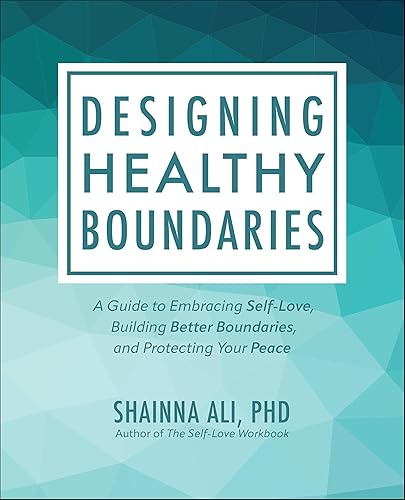
Designing Healthy Boundaries
A practical guide to recognizing, setting, and maintaining the boundaries that protect your wellbeing in every relationship.
Shop on Amazon